
A sharp kitchen knife is one of the most critical pieces of equipment in any kitchen. Many human beings count on a silly knife being extra strong; however, the contrary is real. A sharp blade cuts meals without difficulty and requires an entire lot plenty much less pressure, reducing the chance of slipping and causing injuries. Whether you’re lowering greens, lowering meat, or making geared-up fruit, a properly sharpened knife makes cooking faster, much less complicated, and more amusing.
Why Sharp Kitchen Knives Matter
Before analysing the sharpening way, it’s far more crucial to comprehend why knife sharpness is essential.
Benefits of a Sharp Knife
- Makes meals training less difficult and quicker
- Produces cleanser and further unique cuts
- Reduces hand fatigue
- Improves cooking performance
- Enhances kitchen protection
- Preserves the texture and appearance of meals
A stupid blade crushes factors in preference to cutting through them cleanly. This can damage touchy ingredients, which include tomatoes, herbs, and fish.
Signs Your Kitchen Knife Needs Sharpening
Many human beings wait too long before sharpening their knives. Watch for the ones with unusual symptoms:
Difficulty Cutting Tomatoes
A sharp knife wants to effortlessly slice via a tomato’s pores and skin. If it struggles, sharpening is wanted.
Excessive Pressure Required
When you want to push hard to lessen greens or meat, the blade issue has grown to be stupid.
Uneven Cuts
Dull knives regularly produce jagged or inconsistent slices.
Paper Test Failure
Hold a sheet of paper vertically and try and slice through it. If the knife tears in preference to cuts without difficulty, it needs sharpening.
Understanding Knife Sharpening vs Honing
Many humans confuse sharpening with honing.
Feature Sharpening/Honing Purpose: Removes metallics to create a modern-day day edge Realigns existing edgeFrequencyEvery few months Weekly or before use: Tool Used Whetstone, sharpener, grinding system Honing steelResultRestores sharpnessMaintains sharpness
Both techniques are vital for prolonged-time period knife basic overall performance.
Essential Tools for Sharpening Kitchen Knives
Several tools may be used to sharpen kitchen knives successfully.
1. Whetstone (Sharpening Stone)
Professional cooks often pick whetstones due to the fact they offer awesome manageability and outcomes.
Advantages:
- Creates notably sharp edges
- Suitable for optimum knife types
- Long-lasting and flexible
Common grit degrees:
Grit LevelPurpose200-400Repair damaged blades: 800-1000 Basic sharpening: 3000-6000 Fine sharpening 8000+ Polishing and finishing
2. Manual Knife Sharpener
Manual sharpeners are beginner-outstanding and easy to apply.
Benefits:
- Fast-sprucing device
- Affordable
- Requires minimal capacity
However, they may remove more steel than is crucial over the years.
3. Electric Knife Sharpener
Electric sharpeners provide comfort and speed.
Pros:
- Very smooth operation
- Consistent mind-set
- Quick outcomes
Cons:
- More highly-priced
- Can located on blades faster if used excessively
4. Honing Rod
A honing rod does not sharpen but allows keeping the blade facet amongst polishing procedures.
How to Sharpen Kitchen Knives Using a Whetstone
The whetstone technique is extensively considered the superior approach for undertaking expert-level sharpness.
Step 1: Soak the stone.
Many water stones require soaking earlier than use.
- Place the stone in water for 10–15 mins.
- Wait until air bubbles prevent performing.
Some stones are splash-and-bypass fashions and simply require ground moisture.
Step 2: Secure the Stone
Place the whetstone on a stable, non-slip surface.
You can use:
- A stone holder
- Damp towel
- Rubber base
Stability improves protection and sharpening accuracy.
Step 3: Find the Correct Angle
Most kitchen knives carry out incredible work on:
- 15 levels for Japanese knives
- 20 tiers for Western knives
Maintaining a consistent attitude at some stage in the method is crucial.
Step 4: Begin sharpening.
Position the knife at the selected angle.
Move the blade at some level in the stone:
- Push ahead and barely sideways
- Cover the entire component
- Apply moderate, even stress
Repeat approximately 10–15 strokes on one aspect.
Step 5: Sharpen the opposite side.
Flip the knife and repeat the identical substantial fashion of strokes.
Maintain the same polishing attitude.
Step 6: Check for a Burr
A burr is a tiny fold of metal that develops alongside the blade region.
Carefully run your finger perpendicular to the edge—now not alongside it—to feel for the burr.
Its presence suggests a successful sharpening.
Step 7: Use a Finer Grit Stone
Move to a finer grit stone to refine and polish the brink.
Repeat the polishing with the device using lighter strain.
Step 8: Clean and Dry
Wash the knife thoroughly.
Dry it right now with a clean towel to prevent corrosion.
How to Sharpen Kitchen Knives with a Manual Sharpener
A manual sharpener offers a smooth answer for novices.
Step-thru way of step process
- Place the sharpener on solid ground.
- Insert the knife into the coarse slot.
- Pull the blade through effortlessly.
- Repeat three–five times.
- Move to the extraordinary slot.
- Pull through every special 3–5 instances.
- Clean the blade.
Avoid immoderate strain at the same time as pulling the knife via the sharpener.
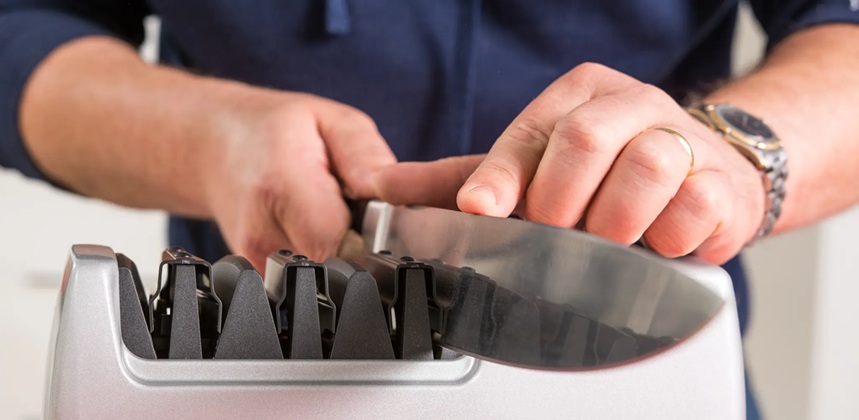
How to Sharpen Kitchen Knives with an Electric Sharpener
Electric sharpeners simplify the sharpening manner.
Instructions
- Turn on the device.
- Insert the knife into the first slot.
- Pull slowly through the sprucing guides.
- Repeat steadily with manufacturer instructions.
- Use finer stages for sprucing.
- Clean the blade after sprucing.
Always examine the product guide for version-particular guidance.
Common Sharpening Mistakes to Avoid
Many novices make errors that reduce polishing effectiveness.
Using the Wrong Angle
Inconsistent angles create choppy edges and terrible slicing and overall performance.
Applying Excessive Pressure
Too much mass strain eliminates unnecessary steel and may damage the brick.
Skipping Fine Grit Stones
Finishing stones create smoother and sharper edges.
Ignoring Honing
Regular honing extends the time between sprucing durations.
Over-Sharpening
Sharpening too regularly shortens knife lifespan.
How Often Should You Sharpen Kitchen Knives?
The answer is based upon utilisation frequency.
Usage LevelRecommended Sharpening Daily cooking every 2–3 months Weekly cooking every 4–6 months Occasional use: once or twice every year
Honing may be achieved weekly or in advance of crucial meal coaching.
Best Practices for Maintaining Sharp Kitchen Knives
Proper care considerably extends issue retention.
Hand Wash Only
Dishwashers can harm blade edges through effect and warmth publicity.
Dry Immediately
Moisture promotes rust and corrosion.
Use Appropriate Cutting Boards
Recommended materials:
- Wood
- Bamboo
- Soft plastic
Avoid:
- Glass
- Stone
- Ceramic surfaces
Store Knives Properly
Good storage options consist of:
- Knife blocks
- Magnetic strips
- Blade guards
- Drawer organizers
Proper storage protects the decreasing component.
Sharpening Different Types of Kitchen Knives
Chef’s Knife
The most versatile kitchen knife.
Recommended attitude:
- Approximately 20 tiers
Santoku Knife
Japanese-style all-purpose knife.
Recommended attitude:
- Around 15 ranges
Paring Knife
Used for peeling and specific cutting.
Requires cautious sprucing due to its small blade length.
Serrated Knife
Serrated blades require specialised polishing rods.
Sharpen every serration in my view instead of using a preferred whetstone.
Professional Knife Sharpening Services
Some knives gain from professional sharpening.
Consider professional services even as
- Blade chips are gift
- Edge damage is severe
- The knife is highly priced.
- You lack sharpening machine
Professional sharpeners use superior gadgets to restore damaged blades efficaciously.
Safety Tips While Sharpening Kitchen Knives
Knife polishing involves managing exposed edges, so safety is crucial.
Follow These Guidelines
- Work on a solid floor
- Keep palms a ways from the edge
- Move slowly and deliberately
- Use enough proper lighting fixtures
- Secure sprucing tools well
- Clean metal filings after sharpening
- Store knives well after finishing
Never rush the polishing procedure.
Choosing the Best Sharpening Method
Each sharpening technique serves superb needs.
Method Skill Level Cost Sharpness Quality Whetstone Intermediate to advanced Moderate Excellent Manual Sharpener Beginner LowGoodElectric SharpenerBeginnerHighVery Good professional service, no functionality needed. Moderate to high. Excellent.
For most control and superior edges, whetstones remain the famous desire among professional cooks.
Final Thoughts
Learning the manner to sharpen kitchen knives is a treasured talent for every domestic cook. Sharp knives enhance safety, overall performance, and precision inside the kitchen at the same time as making food training notably lots much less hard. Whether you pick a whetstone, guide sharpener, electric-powered sharpener, or expert agency, ordinary protection ensures your knives carry out their outstanding function.
Combine habitual honing, proper storage, cautious cleaning, and periodic sharpening to hold your kitchen knives razor-sharp and prepared for any cooking challenge. Investing a piece of time in knife care can dramatically beautify your cooking experience and extend the life of your selected kitchen knives.
FAQ:
1. What is the brilliant manner to sharpen kitchen knives domestically?
Using a whetstone is generally taken into consideration as a notable approach, as it offers fantastic manipulation and creates a drastically subtle facet.
2. How often do kitchen knives want to be sharpened?
Most domestic chefs ought to sharpen their knives every 2–6 months, counting on usage frequency.
3. Can a honing rod sharpen a knife?
No. A honing rod realigns the blade component; however, it does not remove metal to create a brand-new part.
4. Is a whetstone better than an electric-powered sharpener?
A whetstone generally produces a sharper thing and offers greater manipulability at the identical time as an electric-powered sharpener offers convenience and pace.
5. Can all kitchen knives be sharpened?
Most kitchen knives can be sharpened, which includes chef’s knives, Santoku knives, software knives, and paring knives. Serrated knives require specialised sharpening strategies.
6. What attitude must I use whilst polishing kitchen knives?
Western-style knives generally use a 20-degree mindset at the same time as Japanese knives often use a 15-degree attitude.
7. Why does my knife turn out to be stupid short?
Improper sharpening surfaces, dishwasher use, horrific storage, and lack of honing can all motivate knives to lose their detail quicker.
8. Is it secure to sharpen knives at home?
Yes. When using the right strategies, a strong device, and essential protection precautions, polishing knives at home is secure and effective.