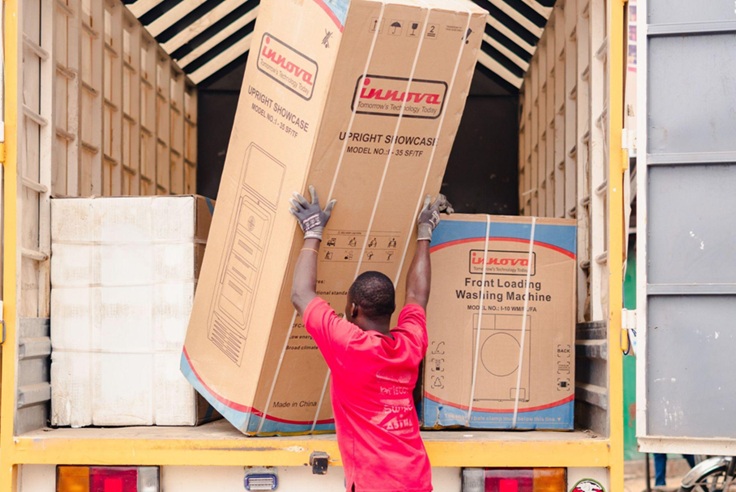

Every move eventually comes down to a handful of problem items. The couch that won’t fit through the doorway. The refrigerator that seems to have gained fifty pounds since you bought it. The mattress that catches every gust of wind like a sail. These are the objects that turn an otherwise straightforward moving day into a test of patience, planning, and lower-back resilience.
The good news is that moving heavy or awkward items isn’t about brute strength. It’s about technique, the right equipment, and a little bit of forethought. Here’s how to handle the big stuff without hurting yourself or your belongings.
Start With a Plan, not a Push
Before anyone lifts anything, walk the route the item will travel. Measure doorways, hallways, staircases, and elevators, and compare those measurements to the item’s dimensions, including any parts that stick out like couch arms or dresser handles. It’s far better to discover a tight squeeze on paper than to find out mid-carry that a sofa is wedged sideways in a stairwell.
Clear the path completely. Remove rugs, lamps, plant stands, and anything else that could become a tripping hazard. If you’re moving between floors, check that stair railings are secure and that lighting is adequate. A few minutes of prep can prevent the kind of accident that turns a moving day into an emergency room visit.
Get the Right Equipment
Trying to muscle heavy furniture across a room is one of the most common causes of moving injuries, and it’s usually unnecessary. A modest investment in equipment pays for itself immediately:
- Furniture dollies let you roll heavy items instead of carrying them. A four-wheel dolly is ideal for boxes and stackable items, while a two-wheel hand truck works well for appliances and tall, narrow pieces.
- Moving straps (sometimes called shoulder dollies or lifting straps) redistribute weight across your back and legs rather than your arms, making it possible for two people to carry loads that would otherwise require four.
- Furniture sliders are small discs that go under the legs of couches, dressers, and tables, letting you glide them across floors with minimal effort.
- Moving blankets protect both the item and your walls or doorframes from scuffs and dings during transport.
None of this equipment is expensive to rent or buy, and all of it dramatically reduces the physical strain of the day.
Lift With Your Legs, Not Your Ego
The classic advice holds up because it’s true: bend at the knees, keep your back straight, and let your legs do the work. Keep the item close to your body rather than holding it out at arm’s length, which puts far more strain on your spine. Avoid twisting while carrying a load — if you need to change direction, move your feet instead of rotating your torso.
Just as important is knowing when to ask for help. If an item feels unstable, unbalanced, or simply too heavy to lift comfortably, stop and get another set of hands. Two people who communicate clearly will always outperform one person pushing through discomfort.
Break Down What You Can
Many large items are easier to move in pieces than as a whole. Remove legs from tables and sofas when possible. Take drawers out of dressers, both to reduce weight and to prevent them from sliding open mid-carry. Unscrew bed frames into their component parts. Detach doors from wardrobes or armor if they open outward and add unnecessary bulk. The fewer protrusions and moving parts an item have, the easier it is to navigate through tight spaces.
Handling Specific Problem Items
Sofas and couches often move best on their end, angled through doorways rather than pushed straight through. Refrigerators and washing machines should stay upright as much as possible to avoid damaging internal components, and should sit for a few hours before being plugged back in if they’ve been tilted. Mattresses benefit from a mattress bag both for cleanliness and to reduce wind resistance if you’re carrying one outdoors. Pianos are a special case — for uprights or grands, it’s almost always worth hiring specialized movers, since the weight distribution and value make DIY moving genuinely risky.
Know When to Call in Professionals
There’s no shame in recognizing a job that’s beyond a DIY approach. Extremely heavy items, tricky staircases, long carries, or a lack of available helpers are all good reasons to hire professional movers, even if just for the problem pieces. Many moving companies offer hourly labor-only services for exactly this situation, letting you handle the easy boxes yourself while experts tackle the awkward furniture.
Moving heavy or awkward items will never be effortless, but it doesn’t have to be dangerous or destructive either. With the right preparation, equipment, and a willingness to ask for help when needed, even the trickiest pieces can make it to their new home safely — and so can you.
If you’d rather leave the heavy lifting to experienced hands, Butler’s Removals & Storage can help make your next move smooth and stress-free.