A walking toilet is one of the most commonplace plumbing troubles residence proprietors face. While it may seem like a small problem, a toilet that constantly runs can waste hundreds of gallons of water every day and extensively grow your water bill. The well-known information is that maximum jogging relaxation room issues are clean to repair without calling a plumber.
Learning a way to repair a running bathroom can save cash, reduce water waste, and help maintain your relaxation room functioning properly. In this manual, you’ll research the commonplace motives of a strolling rest room, a manner to diagnose the problem, and the fantastic answers to restore it.
Understanding Why a Toilet Keeps Running
A toilet runs at the same time as water continuously flows from the tank into the bowl after flushing. Normally, the tank fills with water, after which it stops robotically. When one of the tank additives fails, water keeps flowing, causing the toilet to run.
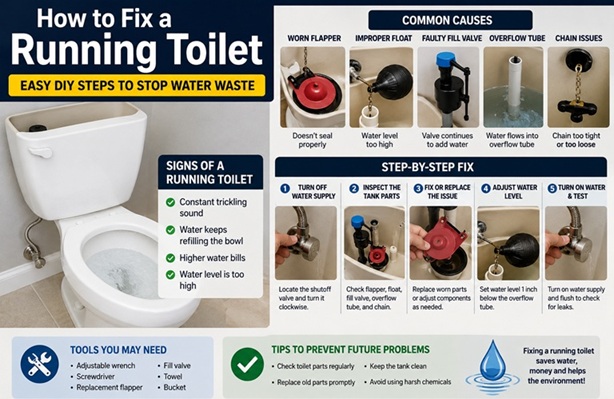
The maximum not-unusual reasons embody the following:
- Worn-out flapper
- Improper drift adjustment
- Faulty fill valve
- Overflow tube issues
- Loose or broken chain
Identifying the right cause is the first step in the route of solving the hassle.
Signs That Your Toilet Is Running
Sometimes a jogging toilet is apparent, but special times the symptoms and signs and signs and signs are diffused.
Common signs embody:
- Constant trickling water sound
- Toilet refills thru itself
- Water movement within the bowl
- Higher-than-regular water payments
- Hissing noises from the tank
If you check any of those signs and symptoms, it is an exceptional concept to investigate the relaxation room as quickly as possible.
Why You Should Fix a Running Toilet Quickly
Many owners postpone toilet protection because of the fact the rest room, however, flushes well. However, delaying renovation can create numerous problems.
Increased Water Bills
A going for walks lavatory can waste masses of gallons of water each month. Even a small leak can lead to noticeably higher software expenses.
Water Conservation
Fixing leaks allows holding water and decreases needless waste.
Preventing Larger Repairs
Minor troubles can grow to be essential plumbing troubles if left untreated.
Improved Bathroom Efficiency
A nicely functioning rest room operates quietly and efficaciously.
How to Fix a Running Toilet by Checking the Flapper
The flapper is the rubber seal placed at the bottom of the tank. It lifts even as you flush and closes later on to prevent water from flowing into the bowl.
Why the Flapper Causes Problems
Over time, the flapper can:
- Crack
- Warp
- Become brittle
- Develop mineral buildup
When this takes area, water leaks into the bowl constantly.
How to Inspect the Flapper
- Remove the tank lid.
- Flush the rest room.
- Watch the flapper because it closes.
- Check for gaps or visible damage.
If the flapper seems worn, replacing it’s also the top-notch solution.
Replacing the Flapper
- Turn off the water delivery.
- Flush the rest room to empty the tank.
- Remove the vintage flapper.
- Install the cutting-edge day flapper.
- Reconnect the chain.
- Turn the water lower lower back on.
This easy repair often solves most taking-walks bathroom issues.
How to Fix a Running Toilet with the useful resource of Adjusting the Float
The flow controls the water level inside the tank.
If the go with the flow sits too immoderately, water will preserve flowing into the overflow tube.
Signs of a Float Problem
- Water diploma close to the top of the tank
- Water entering the overflow tube
- Continuous refilling
Adjusting a Float Ball
Older lavatories use a go-along-with-the-go-with-the-flow ball related to a metal arm.
To modify it:
- Locate the adjustment screw.
- Turn the screw clockwise.
- Lower the water stage slightly.
- Flush and test.
Adjusting a Float Cup
Modern bathrooms generally use a flow cup.
To alter:
- Find the adjustment screw or clip.
- Lower the go with the flow.
- Flush the toilet.
- Observe the water level.
The water wants to forestall approximately one inch beneath the overflow tube.
How to Fix a Running Toilet through Replacing the Fill Valve
The fill valve controls water entering the tank after each flush.
When it fails, the valve might also, moreover, keep offering water even if the tank is full.
Symptoms of a Faulty Fill Valve
- Hissing sounds
- Constant walking and drinking water
- Slow filling
- Irregular water stages
Replacing the Fill Valve
- Shut off the water delivery.
- Flush the rest room.
- Remove extra water from the tank.
- Disconnect the water supply line.
- Remove the antique fill valve.
- Install the opportunity valve.
- Reconnect the deliver line.
- Turn the water-decrease return on.
After installation, test the rest room several times.
Checking the Overflow Tube
The overflow tube prevents water from overflowing onto the relaxation room ground.
If the water level rises above the overflow tube, extra water constantly drains into the bowl.
How to Inspect the Overflow Tube
Remove the tank lid and inspect internally.
If water flows into the tube even though the bathroom is not being used, the water level is just too excessive.
Fixing Overflow Issues
Lower the glide till the water level remains underneath the overflow tube.
This adjustment regularly stops the toilet from running.
Inspecting the Chain
The chain connects the flush control to the flapper.
If the chain is simply too brief, the flapper may not close at all.
If it is too prolonged, it can become tangled.
Signs of Chain Problems
- Flapper stays partly open
- The toilet continues taking walks after flushing
- The handle feels loose
How to Adjust the Chain
- Remove the tank lid.
- Inspect the chain.
- Adjust the duration as favoured.
- Leave moderate slack inside the chain.
The flapper must open and close so freely.
Cleaning Mineral Deposits
Hard water can leave mineral deposits in the bathroom tank.
These deposits can also interfere with:
- Fill valve operation
- Flapper sealing
- Float movement
Cleaning Procedure
- Turn off the water delivery.
- Empty the tank.
- Use vinegar to dissolve deposits.
- Scrub affected areas gently.
- Rinse thoroughly.
Regular cleansing allows keeping proper performance.
Preventing Future Toilet Problems
Routine preservation can prevent many strolling restroom problems.
Inspect Components Regularly
Check:
- Flapper situation
- Water stage
- Fill valve operation
- Chain alignment
Replace Worn Parts Promptly
Most bathroom additives are less highly priced and easy to replace.
Clean the tank periodically.
Removing mineral buildup improves common overall performance and extends detail existence.
Avoid Harsh Chemical Cleaners
Some tank cleaners can damage rubber parts through the years.
When to Call a Plumber
Most walking bathroom issues are clean DIY upkeep. However, expert help can be important if:
- The lavatory maintains its running after maintenance.
- Multiple components are broken.
- There are leaks out of the door of the tank.
- You are aware of cracks in the lavatory.
A certified plumber can speedily discover and remedy more complex issues.
Common Mistakes to Avoid
Ignoring Small Leaks
Even minor leaks waste full-size portions of water.
Overtightening Parts
Too much strain can damage plastic components.
Using Incorrect Replacement Parts
Always buy components well right along with your restroom model.
Skipping Testing
After maintenance, flush the relaxation room several times to make sure the whole lot works successfully.
Benefits of Fixing a Running Toilet Yourself
Many house proprietors effectively do entire bathroom maintenance without expert assistance.
Advantages embody:
- Lower restore fees
- Faster consequences
- Reduced water payments
- Valuable DIY experience
- Better knowledge of own family plumbing
Most protection requires extremely good important systems and minimal plumbing information.
Conclusion
Learning a way to restore a taking-walks restroom is a useful potential that can hold money and save you vain water waste. Whether the hassle entails a defective flapper, an improperly adjusted go-with-the-flow, a worn fill valve, or a chain problem, maximum maintenance is easy and has espresso value.
By reading the tank cautiously, changing worn components, and performing regular maintenance, you may preserve your lavatory working successfully for years. Addressing the hassle early, while not nice, reduces utility fees; however, it additionally facilitates conserving water and avoiding massive plumbing issues.
FAQ
What reasons does a bathroom have to hold off going for walks?
The most common motives are a worn flapper, faulty fill valve, incorrect go-with-the-glide adjustment, or overflow tube troubles.
Can a walking restroom grow my water invoice?
Yes. Taking walks in the lavatory can waste loads of gallons of water every day, leading to higher software charges.
Is it hard to replace a restroom flapper?
No. Replacing a flapper is one of the most effective types of toilet upkeep and generally takes plenty much less than 15 mins.
How do I realise if the fill valve is lousy?
Signs encompass hissing noises, regular water flow, gradual filling, and inconsistent water degrees.
Why is water flowing into the overflow tube?
The water diploma might be set too high. Adjusting the float can treat the hassle.
How regularly do relaxation room additives have to be replaced?
Most relaxation room components last several years; however, they should be replaced each time they display symptoms and signs of damage or damage.
Can I restore a walking lavatory without a plumber?
Yes. Most jogging lavatory issues can be regular with number one equipment and replacement components.
How long does it take to recuperate on a foot rest?
Most preservations take between 15 and 60 mins, depending on the motive of the problem.